
I want to share something I’ve been thinking about a lot recently. It comes from years of working with teachers but also from my own experience. Because if I’m honest, I am someone who has always loved learning.
I still do.
I love being in a room with other teachers, hearing different perspectives, feeling that moment where something clicks into place in a new way. I love the depth of our profession and the fact that we never really get to the end of it. There is always more to understand, more to explore, more to refine and I don’t see that as a problem. I genuinely think it’s one of the privileges of the work we do.
But alongside that love of learning, I’ve also started to notice a pattern. Not just in the teachers I support, but in myself at times too.

There is a difference and I think it’s an important one between learning and collecting learning. Between acquiring knowledge and actually being able to use it.
I meet so many teachers who have invested deeply in their Pilates CPD. They’ve done course after course. They are thoughtful, curious, and they genuinely care about doing a good job for their clients. They can talk about anatomy, fascia, breath, nervous system, biomechanics and they understand it.
But then when they’re in front of a client, something changes.
They hesitate a little. They second-guess themselves. They stay closer to what feels safe, even when they know there is more available to them.
And what’s really important here is: this isn’t a knowledge problem. It’s an application problem.
Applying what you know is a completely different skill. It asks something else of you. It asks you to make decisions in real time, to prioritise what matters most in that moment, to respond to the person in front of you rather than the idea you had in your head before the session started.
That can feel much more exposing. Much more uncertain. Much more human.
And that’s the part we don’t always get to practise in a course environment.
What can happen, and I say this with so much understanding, because I have been there myself, is that we become what I would gently call chronic course-takers.
Not because we’re doing anything wrong, but because learning feels good. It feels like we’re moving forward. It gives us structure, a sense of progress.
This is something I see time and again in the world of Pilates teacher training — incredibly well-educated teachers who can talk fascia and breath and nervous system, but who freeze the moment a real, complex client sits in front of them.
And sometimes, if we’re really honest, it also keeps us just on the edge of things. Because as long as we are still learning, we don’t quite have to step fully into the responsibility of applying it. We don’t have to risk getting it wrong.
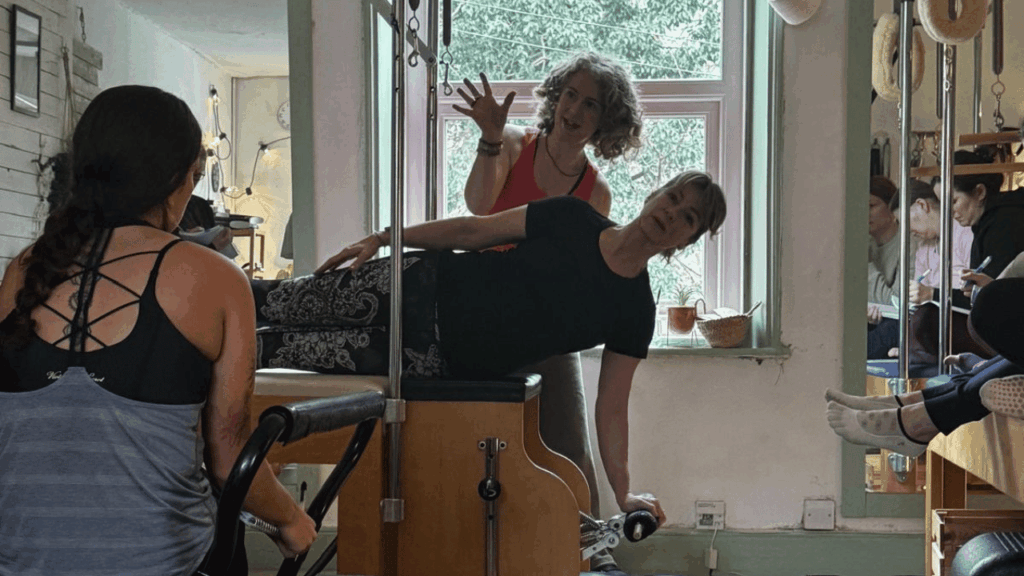
This is exactly why I’ve shaped my work with teachers the way I have. The landscape of Pilates teacher training gives us a strong foundation, but it rarely prepares us for the moment-to-moment reality of applying that knowledge with real people.
What I care about is helping you actually use what you already know.
So when I create something, whether that’s a workshop, a membership, or a mentorship, I’m always thinking: how does this become practical? How does this become interactive? How does it challenge some of the norms we’ve all been taught to stay within?
Not to be disruptive for the sake of it, but because those norms don’t always hold up when you’re working with real people, with real histories, real symptoms, and real complexity.
In the Teachers Connect Membership, we’re not just talking about ideas in isolation. We’re having real conversations. You bring real clients, real challenges, real moments where you’ve thought: I’m not quite sure what to do here. And we sit in that together.
We explore it, we work through it, and we look at how you can apply what you know in a way that actually makes sense in your teaching.
That is very different from learning something in theory and hoping it will land later.
It’s the same with the Whole Body Pelvic Health Mentorship. It’s not just another course you move through, take notes on, and add to your collection. It’s a mentorship for a reason.
You’re invited to apply what you’re learning as you go. To be in it. To try things, to reflect, to be challenged, to receive feedback, and to grow through that process. And yes, that can feel uncomfortable at times, but it’s also where real confidence comes from.
Not from knowing more. From experiencing yourself using what you know and seeing that it works.
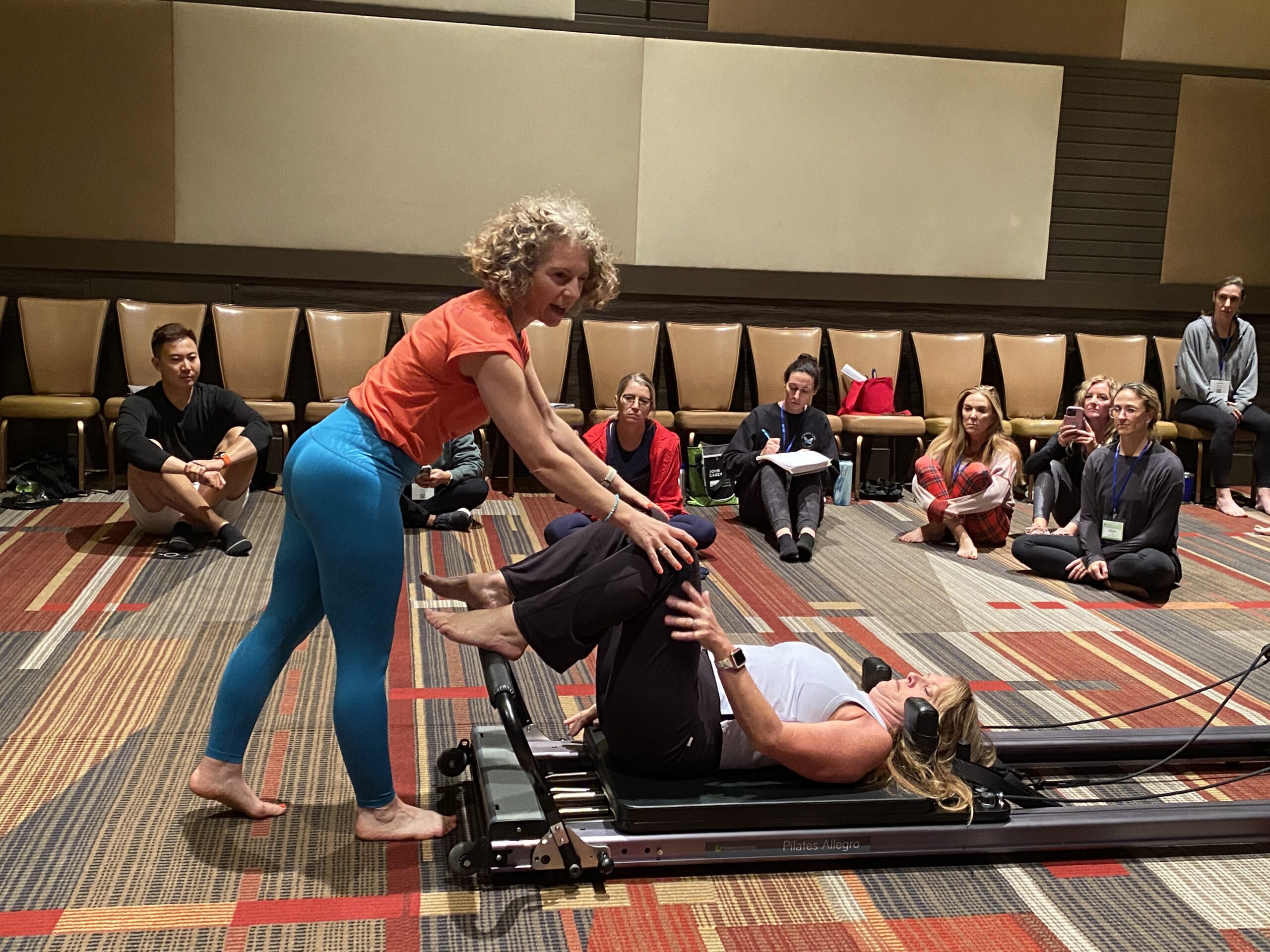
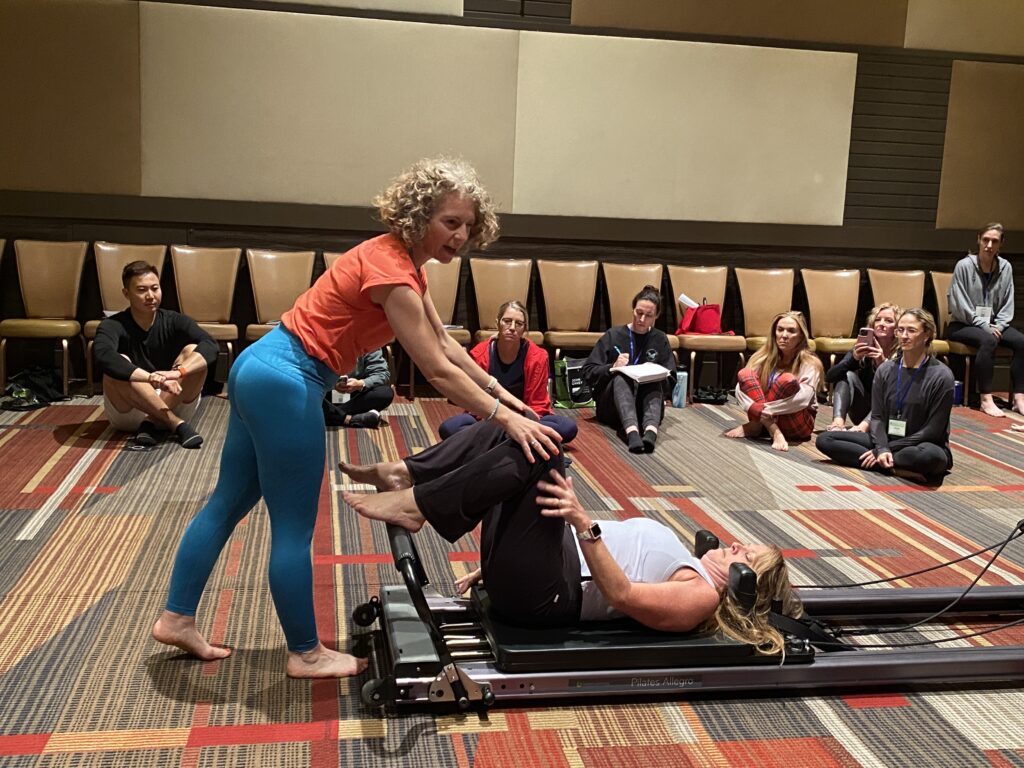
I hold myself to that same standard. Whether I’m at a conference or running a workshop, I’m always asking: how can I make this relevant? How can I make this useful straight away? How can I help the teachers in the room leave feeling like they can do something differently the next day?
Because that’s what matters.
So if you recognise yourself somewhere in this, if you love learning as much as I do but you’re not always sure how to translate that into your teaching, I want to gently offer you a different way of looking at it.
Maybe the next step isn’t another course.
Maybe it’s creating more space to actually use what you already know. To stay with it a little longer. To trust yourself with it, even if it doesn’t feel perfect.
Because the shift doesn’t happen when you finally know enough.
It happens when you start to trust yourself in the doing.
If you’re recognising yourself in this and you’re ready to move from thinking about your teaching to really working on it, this is exactly why I created the Teachers Connect Membership.
It’s a space where you don’t have to figure it all out on your own. Where you can bring your real clients, your real questions, and we work through them together.
Not in theory, but in practice.
So you’re not just learning more, you’re actually using what you already know, with support.
Let’s stay in touch?
next real online class 18th September